
Best AI Game-Building Tools in 2026: Cursor, Rosebud, Replit, Lovable, v0, Bolt
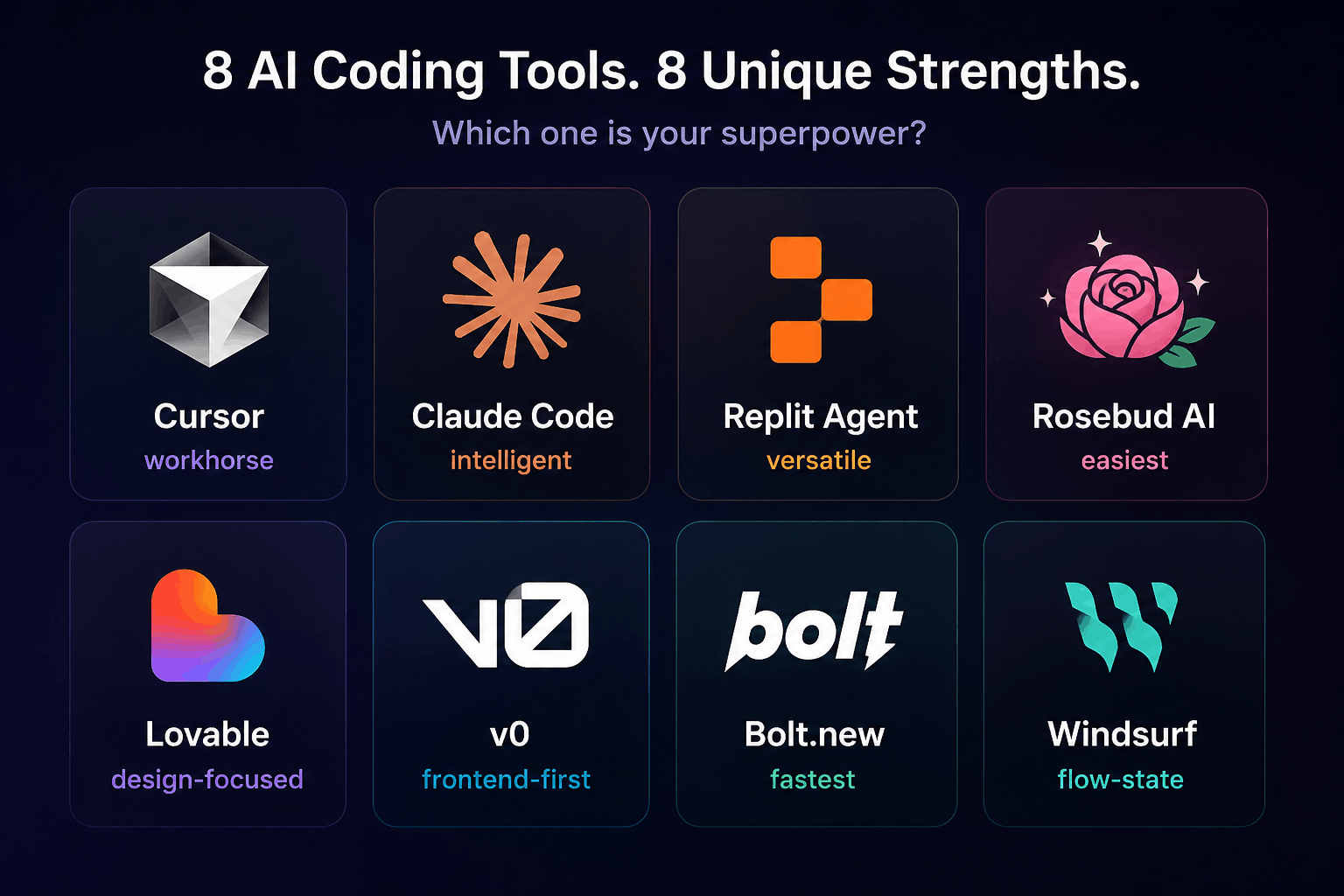
If you're picking an AI tool to build a game with in 2026, you have seven serious options: Cursor, Claude Code, Replit Agent, Rosebud AI, Lovable, v0, and Bolt.new. Windsurf is a strong eighth. Each has strengths and weaknesses for game development specifically | which is different from "general AI coding" because games need fast iteration, browser deployment, and forgiveness for messy code.
This is a hands-on comparison written for someone trying to ship a vibe-coded game. We've tested all eight and run them on identical "build a small browser game" tasks. Below: how each tool stacks up, when to pick which, and the matrix at the bottom for skimmers.
If you're brand new to all of this, start with our guide to vibe coding. For the step-by-step build, see How to Vibe Code a Game in a Weekend.
The short answer
- Best overall for a serious vibe coder: Cursor + Claude as the model
- Best for absolute beginners: Replit Agent (browser-only, hosted)
- Best for "I just want a game from a paragraph": Rosebud AI
- Best for full-app game prototypes in under 60 seconds: Bolt.new
- Best for terminal lovers: Claude Code
- Best for UI-heavy games (dashboards, idle, card): Lovable or v0
- Best for autonomous "go build this for an hour" work: Windsurf
Read on for the breakdown of why.
Cursor
What it is: A fork of VS Code with a built-in AI agent panel ("Composer") that can plan, edit, and run code across multiple files. The model is plugged in by you (Claude, GPT, or Cursor's own).
Why it dominates: Cursor is the workhorse that the vast majority of professional Vibe coders use. Composer is fast, the diff UI is excellent, and the editor is the tool you already know. Multi-file edits are reliable, undo/accept/reject is one keyboard shortcut, and it stays out of the way when you don't need it.
For games specifically: Excellent. The hot-reload loop with a local dev server is tight, the agent respects file scoping if you ask, and switching models mid-session ("use Claude for this refactor, GPT for this UI") is one click.
Weaknesses: You need to know what you're doing at the OS level | install Node, run a dev server, deploy somewhere. Not the right tool for "I have never coded before."
Pricing: A generous free tier and a $20-40/mo pro tier with higher rate limits.
Claude Code
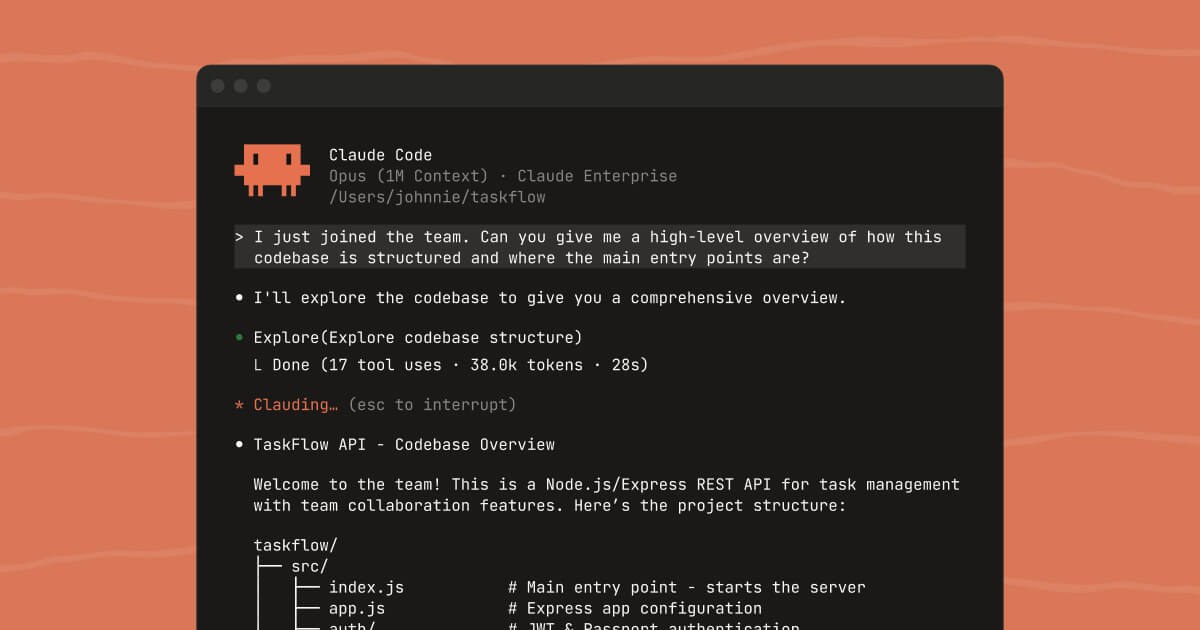
What it is: Anthropic's official CLI for Claude, runs in your terminal, can read your filesystem, and execute commands. Pair it with any editor.
Why it's strong for vibe coding: It treats your project as a project, not a chat. Claude has the most reliable code reasoning of any model in 2026, and Claude Code makes it trivial to give the agent a real task ("refactor my entire input system") and walk away for 20 minutes. It also handles multi-step debugging beautifully | the kind where the agent runs the game, sees the error, edits the file, and runs again without asking.
For games specifically: Best-in-class for medium-complexity refactors and "just make this work" instructions. Less good as your only tool because you usually want a visual editor too.
Weaknesses: Terminal-only. If "the terminal" makes you tense, this is not your tool.
Pricing: Pay-per-token, included in Anthropic Pro / Max plans.
Replit Agent
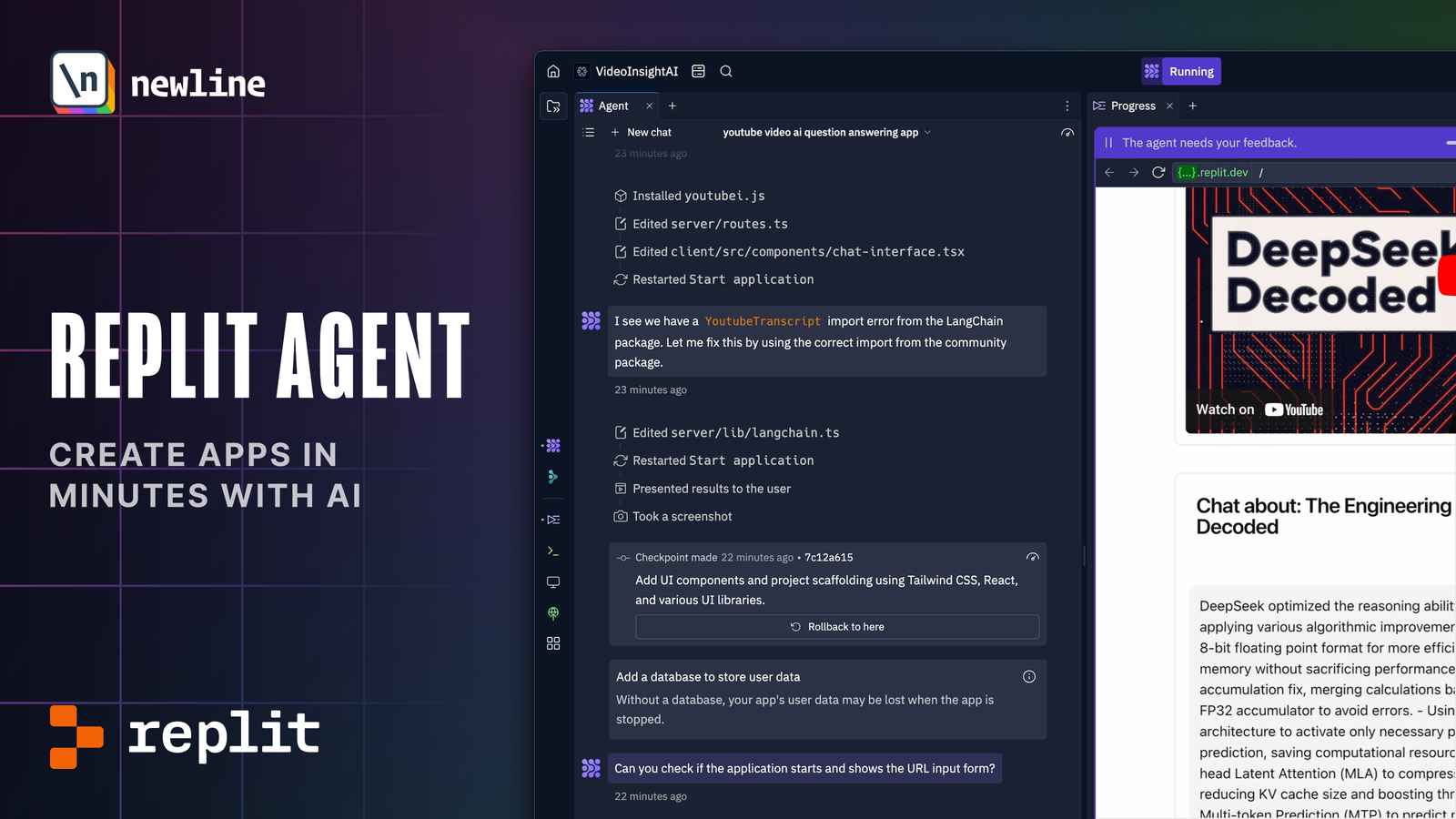
What it is: Replit is a browser-based IDE + hosting platform. The Agent is a built-in AI that builds entire projects from a paragraph and ships them to a live URL on save.
Why it's the best beginner tool: Zero local setup. You sign up, type your idea, the agent scaffolds the project, and you have a public URL within minutes. No "install Node, npm install, configure deploys" pain.
For games specifically: Excellent for first-game weekends. The hot-reload + live URL combo means you can share with friends mid-build. Replit's database (Replit DB) handles save states with one line of code.
Weaknesses: Power ceiling. As your game grows, the browser IDE feels constrained, free-tier Repls sleep, and the runtime is slower than your local laptop. Most pros graduate to Cursor.
Pricing: Limited free tier; $20+/mo for serious work.
Rosebud AI
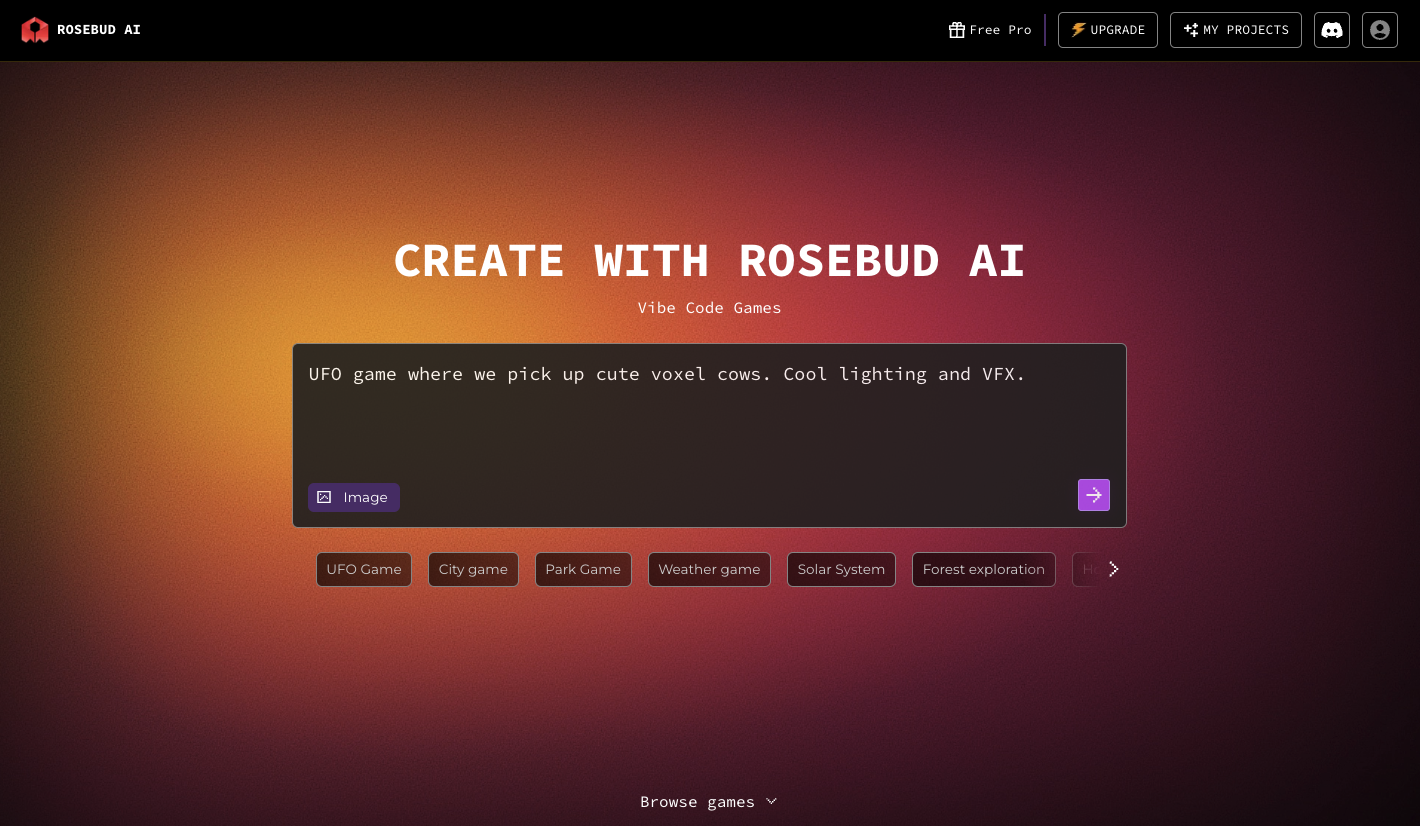
What it is: A game-specific platform where you describe a game in a paragraph and get back a Phaser-based browser game.
Why it's special: The most opinionated tool on this list. Rosebud knows it's making a game, so the output ships with sprite handling, basic physics, sound, and a play / pause loop already wired up. You don't write boilerplate; you don't pick an engine.
For games specifically: The fastest 0-to-60 in the entire list for someone who doesn't want to manage code at all. The output is harder to deeply customise than a Cursor project, but for a 60-second game | the kind that does well on our casual and puzzle categories | it's perfect.
Weaknesses: You're locked into Phaser and the Rosebud playground UI. Hard to graduate a game to a custom domain or to integrate complex backends.
Pricing: Free tier with daily caps, paid plans for higher generation volume.
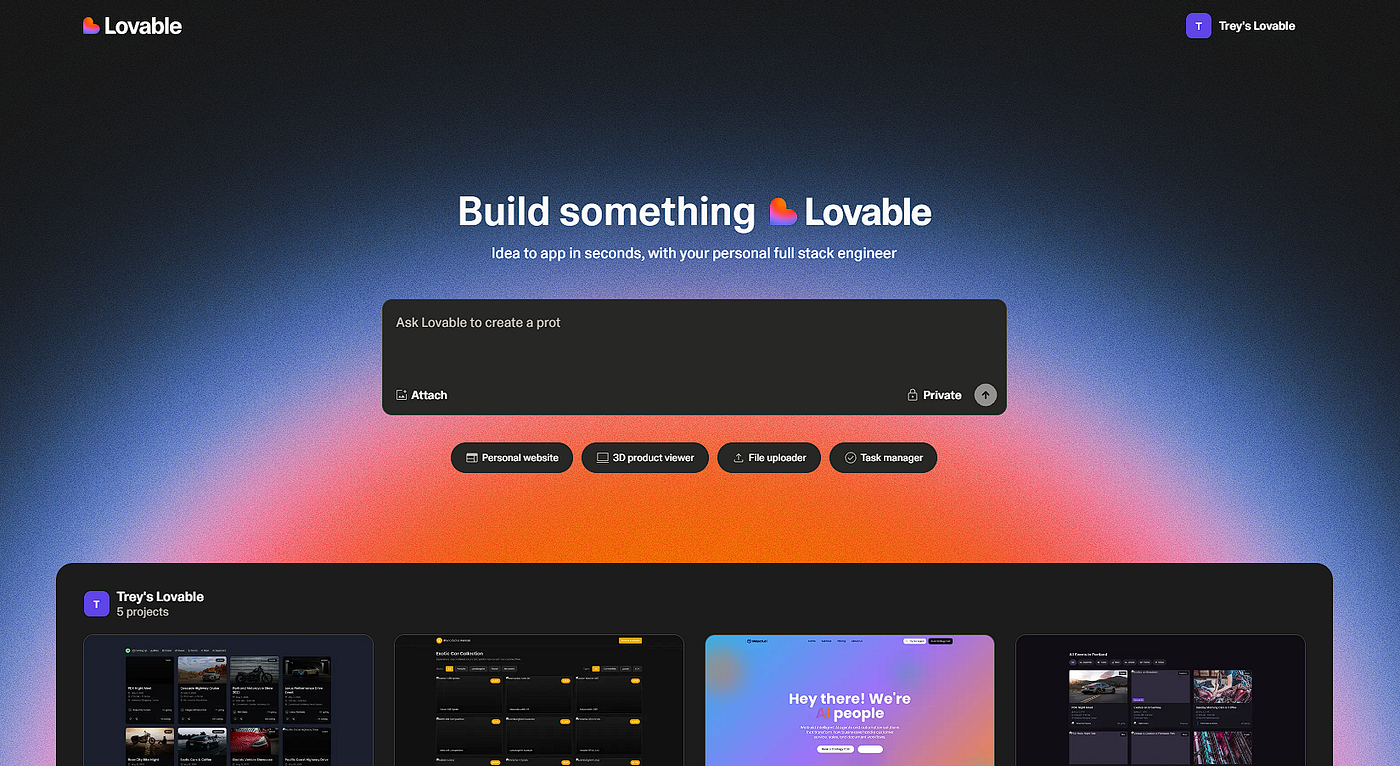
Lovable
What it is: A "describe an app, get a full app" tool that became famous for $1M ARR-in-a-month consumer apps. Outputs are React-based.
For games specifically: Great for UI-heavy games. Idle games, card games, dashboard-style management games. Lovable will make a beautiful idle bakery in under an hour. It's less good for canvas-rendered or 3D games | it's a UI-first tool.
Weaknesses: Output assumes React + Tailwind. If you want a hand-rolled canvas game, Lovable will fight you.
Pricing: Generous free tier, paid plans scale with generations.
v0
What it is: Vercel's UI-generation tool, originally for Tailwind / shadcn UIs, now a full app generator. Tightly integrated with Vercel hosting.
For games specifically: Similar profile to Lovable | shines on UI-driven games, struggles with canvas-heavy ones. Where v0 wins: integration with Vercel hosting is one click. If you don't want to think about deploy at all, v0 is a complete loop.
Weaknesses: Same as Lovable | UI-first.
Pricing: Free tier; pay for credits beyond it.
Bolt.new
What it is: A browser-based "type the prompt, get a live app in 30 seconds" tool from StackBlitz.
For games specifically: Unmatched for one-shot prototypes. Type "tower defense in space, click to place towers, enemies follow a path" and 60 seconds later you have a runnable game in your browser. The first iteration is shockingly good. Subsequent iterations | making changes after the first generation | are weaker than Cursor.
Weaknesses: Best as a prompt-and-fork tool, not a daily driver. Use it to scaffold, then continue in Cursor.
Pricing: Free tier; paid for unlimited.
Windsurf
What it is: A Cursor competitor (also a VS Code fork) with a stronger autonomous-agent stance | "Cascade" mode will run for 30+ minutes on a single goal without needing supervision.
For games specifically: Best for tasks where you want to walk away. "Add a save / load system, hook up localStorage, write the UI for it, add tests" | give it that, take a coffee break, come back. It will have done it.
Weaknesses: Costs more for the autonomous time. The hand-off-and-walk-away style is polarising | some developers love it, some find it scary.
Pricing: Free tier; pro at $15+/mo.
The matrix
| ToolSetupFor beginnersFor canvas/3D gamesFor UI gamesSpeed of first runBest when | ||||||
| Cursor | Medium | OK | Excellent | Excellent | Medium | You're serious about it |
| Claude Code | Easy | Hard | Excellent | Excellent | Medium | You live in the terminal |
| Replit Agent | Zero | Best | Good | Good | Fast | You're a true beginner |
| Rosebud AI | Zero | Best | Game-specific | Limited | Fast | You want pure prompt-to-game |
| Lovable | Zero | Good | Weak | Excellent | Medium | Idle / card / UI games |
| v0 | Zero | Good | Weak | Excellent | Medium | You're already on Vercel |
| Bolt.new | Zero | Good | Good | Good | Very fast | One-shot prototype |
| Windsurf | Medium | OK | Excellent | Excellent | Medium | Long autonomous tasks |
The recommended stack
If you're starting fresh today and want the most flexible long-term setup:
- Bolt.new for the first 60-second prototype to scaffold the idea
- Cursor with Claude as the daily driver for iteration
- Vercel or Netlify for hosting
- VibeTopList for the leaderboard / discovery
Total cost: $0 to $20/month depending on Cursor plan. Total setup: under an hour.
What about the model?
Inside any tool that lets you pick the model, the answer in mid-2026 is:
- Claude Opus or Sonnet for code reasoning, refactors, and "make this work" tasks. The most reliable code output overall.
- GPT-5 for fast UI generation and front-end heavy work.
- Gemini 2.5 Pro for very long context (whole-codebase reasoning).
Most pros default to Claude and switch to GPT-5 for specific tasks. Don't sweat the choice | swap mid-session is one click in Cursor or Windsurf.
FAQ
What is the best AI tool for game development in 2026?
For most people: Cursor + Claude as the workhorse, with Bolt.new or Rosebud for fast prototyping. For absolute beginners: Replit Agent. There is no single best tool | the right answer depends on your experience level and the kind of game you're making.
Is Cursor better than Replit for games?
For experienced builders, yes | Cursor is faster, more flexible, and has a better diff UI. For first-time vibe coders, Replit's zero-setup browser experience is a real advantage. Many people start on Replit and graduate to Cursor.
Can I make a game with no coding skills using these tools?
Yes. Rosebud AI, Bolt.new, Lovable, and v0 are all paragraph-to-app tools that don't require you to read code. Read our walkthrough at How to Vibe Code a Game in a Weekend.
How much do these AI game tools cost?
All eight have free tiers. Serious use lands between $20 and $40 per month. Cursor + an Anthropic Claude subscription is the most common pro setup at around $40 total.
Which AI tool produces the best graphics?
None of these are art tools. They produce code; the visuals come from your prompts and chosen assets. Pair any of them with Midjourney, Flux, or Krea for art and you have a full pipeline.
What's the best AI tool for multiplayer games?
Cursor with Claude as the model. Multiplayer needs careful, multi-file reasoning across client + server, and Claude is the strongest at that in 2026. Pair with a hosted realtime backend (Supabase, PartyKit) so the agent doesn't have to invent the netcode.
Will any of these tools still exist in 2027?
The category will. Specific tools will consolidate. Bet on the ecosystems with the strongest distribution (Cursor, Replit, Anthropic, Vercel) and treat the others as "great while they last." All output is portable code, so switching costs are low.
Bottom line
Pick one tool from the recommended stack and start building this weekend. The fastest way to discover which tool fits your brain is to ship one tiny game with it and see if you want to ship a second. List the result on VibeTopList and let the leaderboard tell you whether it landed.
Built a vibe-coded game?
List it free on VibeTopList | get a permanent game page, organic traffic, and engaged players who actually vote.
+ Submit Your Game